 Skip to content


Is Artisanal Makeup Better Than Mass Produced?
Table of Contents
- Quick Comparison: Artisanal vs Mass Produced Makeup
- High-End vs Drugstore Makeup Ingredients
- Benefits of Small-Batch Beauty Products
- Why Artisanal Makeup Is Better for Skin
- Performance Benchmarking: Wear Time and Application
- Supply Chain Transparency and Ethical Sourcing
- Is Artisanal Makeup Better Than Mass Produced? The Verdict
- Frequently Asked Questions
Last Updated: September 13, 2026
Quick Comparison: Artisanal vs Mass Produced Makeup
The short answer is that is artisanal makeup better than mass produced depends entirely on what you value: pigment density and skin compatibility, or price and convenience. At Artonit, we build every compact in small batches with pigment-saturated formulas. Artisanal makeup is cosmetics produced in limited runs by small teams, with closer control over formulation and finishing, while mass-produced makeup is manufactured at industrial scale where volume and cost efficiency drive every decision. Prioritizing these meticulous production methods reveals the true value of artisan goods as a reflection of the craftsmanship and intentionality embedded in every batch.
Here is how the two approaches stack up on the criteria that actually matter:
| Criteria | Artisanal Makeup | Mass Produced Makeup |
|---|---|---|
| Batch size | Small, limited runs | Large, continuous runs |
| Pigment concentration | High, saturated payoff | Variable, often diluted |
| Ingredient sourcing | Traceable, often named | Blended commodity supply |
| Quality control | Hands-on, per batch | Statistical sampling |
| Packaging | Collectible, hand-finished | Standardized, disposable |
| Price per unit | Higher | Lower |
| Shelf life | Shorter, preservative-light | Longer, preservative-heavy |
That table is the honest version. Now let's dig into where each approach genuinely wins.
High-End vs Drugstore Makeup Ingredients
High-end and drugstore formulas often share the same base ingredients, but they differ in concentration, grade, and how much pigment the manufacturer is willing to pay for. A mass-market eyeshadow can legally list mica first and still deliver weak color, because the ratio of filler to pigment is a cost decision, not a chemistry one.
Pigment Concentration and Payoff
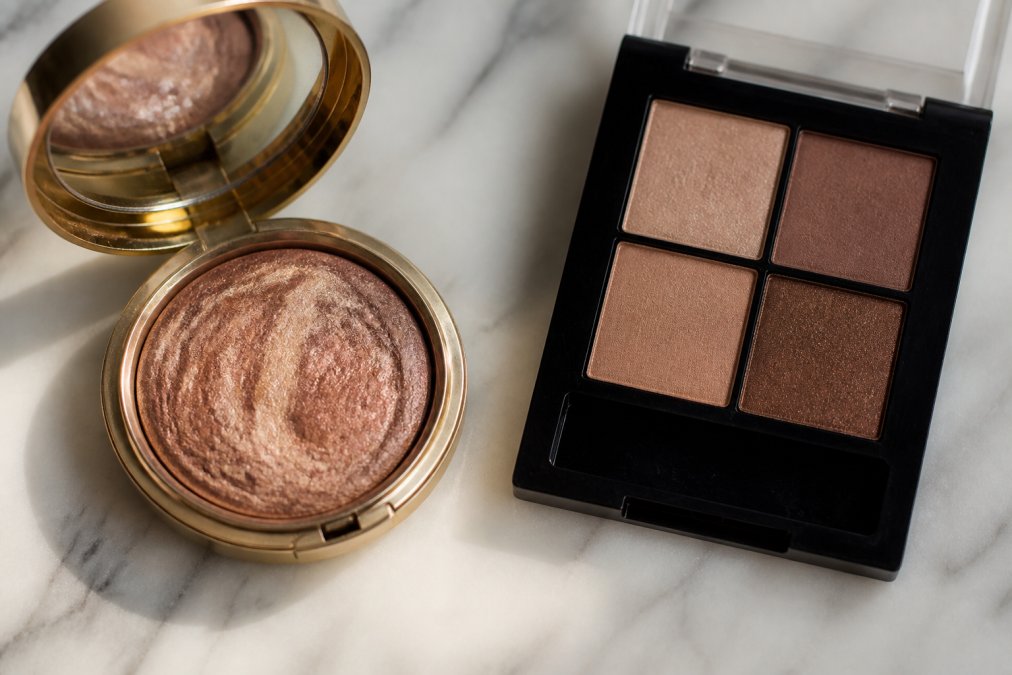
Pigment concentration is the single biggest driver of how a shadow performs. Pressed powders need binders, talc or kaolin, and emollients to hold together. When a manufacturer reduces pigment to cut costs, you get chalky payoff, patchy blending, and the need to build five layers for one look. Artisanal formulas tend to load pigment higher. Artonit's Ombres Artistiques are milled fine and pigment-rich, so a single pass deposits real color with minimal fallout.

Synthetic vs Natural Formulations
The synthetic-versus-natural debate is more nuanced than most marketing suggests. Synthetic pigments like iron oxides and ultramarines are stable, consistent, and well regulated. Natural colorants such as carmine have a long history but can vary batch to batch. What matters is not the label but the formulation: a well-built product can use both. Preservative-free and talc-free claims matter for sensitive skin, but they also shorten shelf life, which is a trade-off artisanal buyers accept knowingly.
Benefits of Small-Batch Beauty Products
Small-batch production gives makers control that factories cannot match. When a run is measured in hundreds rather than hundreds of thousands, the person mixing the formula can adjust, inspect, and finish each unit. That is the core benefit of small-batch beauty products: accountability at the point of manufacture.
Batch Consistency and Quality Control
Batch consistency is the fair criticism leveled at small makers, and it deserves a straight answer. Consistency comes from documented formulas, calibrated weighing, and testing every run, not from volume. Mass manufacturing achieves consistency through automation and statistical sampling, which catches defects in aggregate but not always in the individual compact you buy.
Why Artisanal Makeup Is Better for Skin
Artisanal makeup is often formulated to be gentler on skin. That said, "better for skin" is not automatic. It depends on the formula and on how the product is used.
Regulatory and Safety Standards
Both artisanal and mass-produced cosmetics sold in the United States fall under the same rules (the FDA). The FDA's cosmetics and color additive regulations govern which color additives are permitted and how ingredients must be labeled, and the FTC's advertising guidance on cosmetic claims requires that performance and safety claims be substantiated. Small makers are not exempt. The difference is enforcement reality: a large manufacturer has a compliance department, while a small maker's safety depends on the integrity of the person formulating.
Performance Benchmarking: Wear Time and Application
Most articles on this topic argue from ethics or feel. Almost none benchmark performance. That is the gap this section fills: a structured way to compare an artisanal formula against a mass-produced one on the same face, under the same conditions, using criteria you can actually observe.
The Four Metrics That Matter
Forget vague claims about "long wear." Four measurable properties separate a good formula from a great one:
- Pigment payoff per pass. How much color lands on the first swipe versus the fifth. A pigment-dense shadow deposits visible color in one pass; a diluted one requires building.
- Wear time to first crease. Hours elapsed before product settles into eyelid folds. This is driven by binder-to-pigment ratio and the emollients used, not by brand tier.
- Oxidation shift. How much a shade darkens or turns orange over a full day. Iron oxides are stable; some lower-grade organic pigments are not.
- Fallout and kickup. Loose powder that drops onto the cheek during application, a function of how tightly the powder is pressed and how fine the mill is.
How to Run a Fair Side-by-Side
A controlled comparison takes one afternoon and removes the guesswork:
- Apply the artisanal formula to one eye and the mass-produced formula to the other, same primer, same brush, same number of passes.
- Photograph both under the same light at application, at the four-hour mark, and at the eight-hour mark.
- Note creasing, fading, and any color shift at each checkpoint.
- Repeat on a second day with the eyes reversed to rule out skin asymmetry.
Pigment-dense formulas can hold color longer because the pigment sits on the surface rather than sinking into fine lines, but the effect depends on the binder system, not the price tag. A cheap formula with a good binder can outperform an expensive one with a poor one.
Where Artisanal Formulas Tend to Win and Lose
Artisanal formulas generally win on payoff per pass and on oxidation stability. They tend to lose on wear time when they are preservative-light and emollient-heavy, since those formulas can migrate on oily lids faster than a mass-market formula built around film-formers and silicone binders.
Application experience follows the same logic. A finely milled, well-bound powder glides and deposits evenly; a poorly bound one skips and kicks up fallout. Flexibility matters too: a compact that can be applied dry for a soft wash or with a damp brush for intensified brilliance effectively doubles its range.
The Trade-Off Nobody Benchmarks
Wear time and skin compatibility pull in opposite directions. The film-formers and heavier preservative systems that extend wear are the same ingredients that irritate reactive complexions. An artisanal formula that skips them may fade two hours earlier but leave your lid calm. That is not a defect; it is a design choice, and benchmarking it honestly means measuring both the wear curve and the skin response, not just the clock.
Supply Chain Transparency and Ethical Sourcing
Supply chain transparency is the angle mass-produced cosmetics struggle with most, and it is also the one competitors cover in a single vague paragraph. Here is the mechanism behind the slogan.
Why Traceability Breaks at Scale
A mass-market eyeshadow may contain mica, iron oxides, talc or kaolin, a binder, and two or three emollients. Each of those inputs can pass through a broker, a blender, and a contract manufacturer before it reaches the brand that puts its name on the compact. By the time the finished product exists, the brand may have contractual visibility into its direct supplier but no practical way to trace a specific mica lot back to the mine it came from. That is not always negligence; it is a structural consequence of buying commodity inputs in tonnage.
Small-batch makers buy in kilograms, not tons. That smaller volume makes it economically feasible to buy directly from a named supplier, keep lot documentation, and answer the question "where did this come from".
The Hidden Costs of Mass Production
The price gap between artisanal and mass-produced makeup is real, but it is not the whole cost picture. Two costs rarely appear on the label:
- Labor. Industrial cosmetics manufacturing is built around automation and low-margin contract labor. The savings show up in the price; the working conditions behind them usually do not.
- Carbon and waste. Continuous production runs, standardized plastic packaging, and long freight routes from contract manufacturers to distribution centers all carry an environmental load that a small run with refillable packaging avoids.
Neither cost is automatically disqualifying, and neither is automatically solved by going artisanal. A small maker who ships single units by air freight can have a worse footprint than a factory that ships by sea. The point is that "cheaper" and "cleaner" are separate questions, and most articles collapse them into one.
What Verifiable Sourcing Actually Looks Like
Transparency is a claim you can test. A maker with a real supply chain can typically tell you:
- The name of the supplier or region for its mica and pigments.
- Whether it buys direct or through a broker.
A maker that cannot answer those questions is not necessarily unethical, but it is not transparent either, and the difference matters when you are paying a premium for accountability.
Conscious Consumerism Without the Guilt Trip
The practical takeaway is not that artisanal is always cleaner. It is that small scale makes verifiable sourcing easier, and verifiable sourcing is what lets you make a decision on facts rather than on a label.
Is Artisanal Makeup Better Than Mass Produced? The Verdict
For pigment payoff, skin-friendly formulation, and traceable sourcing, artisanal makeup offers distinct advantages. For price per unit and shelf stability, mass-produced makeup offers distinct advantages. Is artisanal makeup better than mass produced? For the buyer who treats makeup as personal expression and values a luxury feel, artisanal makeup can be a compelling choice, and the difference is often most noticeable in eyeshadows and complexion products where pigment concentration decides the result.
The honest caveat: artisanal is not automatically superior. A careless small maker produces a worse product than a disciplined factory. What you are really buying is accountability.
The hardest part of switching to artisanal makeup is trusting a formula you cannot swatch in a store. Artonit removes that risk with pigment-saturated formulas, small-batch production, and hand-finished compacts crafted between Italy and the United States. Explore named shades like MOI & MOI and FOCUS - THE MATTES, each built to transcend trends rather than chase them. Discover the vision at Artonit and make your routine a form of personal expression.


Frequently Asked Questions
What is the difference between high-end and drugstore makeup ingredients?
High-end and artisanal formulas typically use higher concentrations of pigment and finer-milled powders, which means you need less product for full coverage. Drugstore and mass-produced options often rely on fillers like talc to bulk up the formula. The result is that artisanal makeup can deliver richer color payoff with a single swipe, while mass-produced products may require more layering to achieve the same intensity.
What are the primary benefits of small-batch beauty products?
Small-batch production allows for closer quality control at every stage. Each batch is carefully monitored. This means fewer compromises on formulation and a more consistent product from one order to the next. Small-batch brands also tend to produce in lower volumes, which reduces the risk of product sitting in warehouses past its ideal shelf life.
Is artisanal makeup safer for sensitive skin than mass-market brands?
Artisanal makeup often skips common irritants like parabens and heavy synthetic fillers, which can be gentler on reactive skin. However, natural ingredients can still trigger allergies, so patch testing is always wise. The key difference is that small-batch brands often prioritize ingredient transparency, making it easier to identify what works for your skin and what does not.
Does mass-produced makeup lack the pigment saturation of handcrafted formulas?
Mass-produced makeup is formulated for broad appeal and cost efficiency, which often means lower pigment concentration and more filler ingredients. Handcrafted formulas like those in artisanal compacts prioritize pigment saturation, so a little goes a long way. If you have ever noticed that a drugstore eyeshadow needs three layers to show up, that is the difference in pigment load at work.