 Skip to content


Choosing High Pigment Makeup Shades: A 2026 Guide
Table of Contents
- Understanding High Pigment Makeup Shades
- How to Determine Skin Undertone for Shade Selection
- Assessing Pigment Payoff and Opacity
- How to Choose Foundation Shade Across Skin Depths
- Selecting Colors by Eye Color and Color Theory
- How to Apply Pigmented Eyeshadow for Maximum Impact
- How to Make Makeup Last All Day Without Fading
- Testing Pigment in Store and Online
- Frequently Asked Questions
Last Updated: October 5, 2026
Understanding High Pigment Makeup Shades
High pigment makeup shades deliver intense color payoff and vibrant opacity in a single application, making them essential for anyone seeking bold, long-lasting looks. At Artonit, we craft pigment-saturated formulas designed to transform your eyes into a canvas for artistic expression.

Pigment concentration directly determines how much color deposits on your skin with each stroke. A highly pigmented formula means you need less product to achieve full coverage, while lower-pigment formulas require layering and blending to build opacity.
The global cosmetic pigments market is expanding significantly, with Fortune Business Insights forecasting growth to USD 1.66 billion by 2034, driven partly by demand for inclusive shade ranges and intensely pigmented products.
Pigment payoff matters because it affects application speed, product longevity, and the visual impact of your makeup.
How to Determine Skin Undertone for Shade Selection
Your undertone, the subtle hue beneath your skin's surface, determines which pigmented shades will harmonize with your complexion and enhance your natural features.

Undertones fall into three primary categories: warm (golden, peachy, or red-based), cool (pink, red, or blue-based), and neutral (a balanced mix). Identifying your undertone is the foundation of selecting pigmented makeup that looks intentional rather than clashing.
To determine your undertone, examine the veins on your inner wrist in natural daylight. Greenish veins suggest warm undertones; blue or purple veins indicate cool undertones; if you see both equally, you likely have a neutral undertone.
Once you've identified your undertone, apply this framework to shade selection:
| Undertone | Best Pigmented Shades | Avoid | Why |
|---|---|---|---|
| Warm | Terracotta, bronze, warm burgundy, golden browns | Cool reds, blue-based purples, ash grays | Warm pigments echo your natural undertone, creating harmony |
| Cool | Jewel tones, cool reds, plum, blue-based shadows | Orange, warm gold, peachy tones | Cool pigments complement cool undertones without clashing |
| Neutral | All pigmented shades work | None inherently | Flexibility to wear any color family effectively |
Skin depth and undertone are independent factors. According to research on foundation shade development for darker skin tones from EurekAlert, inclusive pigment systems now offer high-pigment options across the full spectrum of undertones and skin depths, making it easier to find shades that honor your unique coloring.
Assessing Pigment Payoff and Opacity
Pigment payoff refers to the intensity of color that transfers to your skin with a single application.
High-pigment formulas typically offer full opacity in one application, while lower-pigment shades require layering. The distinction matters because it affects how you apply makeup, how much product you use, and how the final look appears.
To assess pigment payoff accurately, swatch shades on your inner arm or jawline in natural daylight, not in-store fluorescent lighting.
Opacity varies by finish. Matte pigmented shades typically offer fuller coverage than iridescent or shimmer finishes, which contain light-reflecting particles that diffuse color slightly.
How to Choose Foundation Shade Across Skin Depths
Foundation requires more precision than eyeshadow because it covers a larger area and serves as the base for your entire face.
Start by identifying your skin depth on a scale from very light to very deep.
Test foundation by applying a small amount to your jawline, blending downward onto your neck. The shade should disappear into your skin without creating a visible line.
For those with deeper skin tones, inclusive pigment systems have expanded dramatically. Future Market Insights projects the global market for inclusive shade pigment systems for deep skin tones will grow from USD 163.0 million in 2026 to USD 378.9 million, reflecting increased availability of high-pigment foundations across a broader range of depths and undertones.
If you're shopping for foundation, request samples in multiple shades and test them at home in your natural lighting.
Selecting Colors by Eye Color and Color Theory
Color theory provides a framework for selecting eyeshadow and pigmented shades that enhance your eye color and create visual interest.
The color wheel divides colors into warm (reds, oranges, yellows) and cool (blues, purples, greens) families. Complementary colors sit opposite each other on the wheel, for example, blue and orange, or purple and yellow.
Use this framework based on your eye color:
- Blue eyes: Warm pigmented shades like terracotta, bronze, warm burgundy, and golden browns create striking contrast. Avoid cool blues and grays, which blend into blue eyes rather than enhancing them.
- Brown eyes: Nearly all pigmented shades complement brown eyes. Cool jewel tones (emerald, sapphire, amethyst) create dramatic contrast; warm shades (bronze, copper, warm burgundy) create harmony.
- Green eyes: Plum, burgundy, and warm reds make green eyes pop. Avoid cool greens and blues, which muddy green eye color.
- Hazel eyes: Experiment with both warm and cool pigmented shades. Warm tones enhance the golden flecks; cool tones deepen the brown base.
Beyond eye color, consider the overall look you're creating. A monochromatic approach, using multiple shades from the same color family, creates sophistication and depth. A complementary approach, pairing opposing colors on the wheel, creates drama and visual impact.
How to Apply Pigmented Eyeshadow for Maximum Impact
Applying high-pigment eyeshadow correctly ensures you achieve the color payoff and blendability the formula promises.
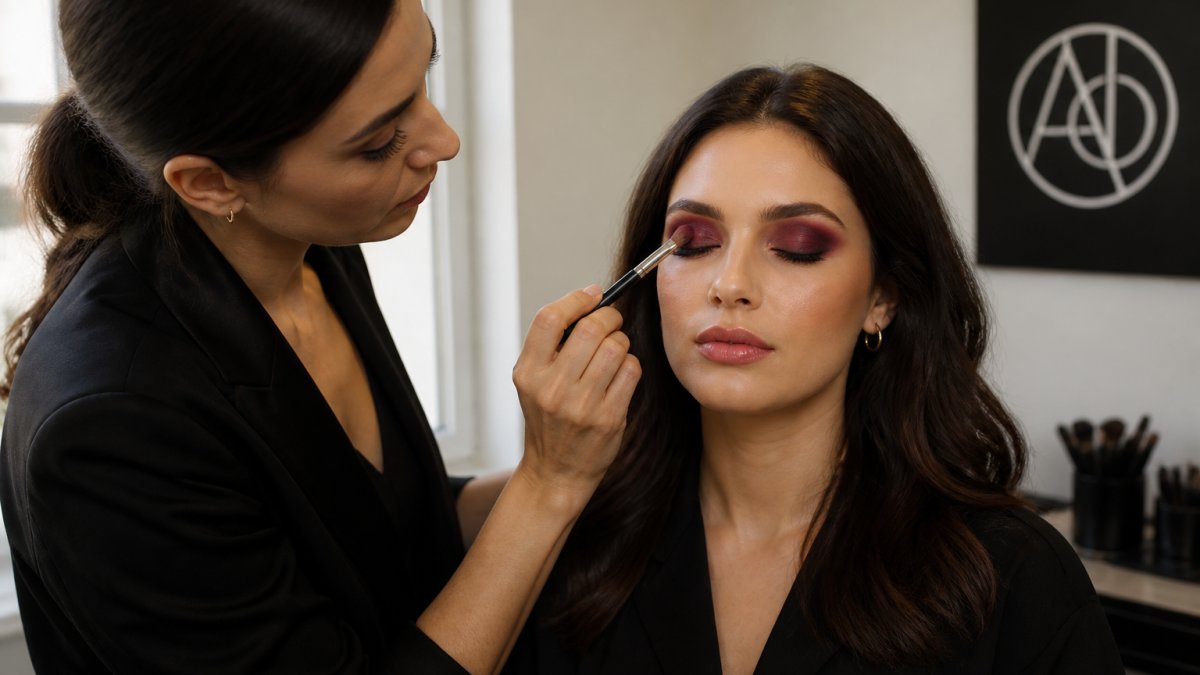
Start with a clean, primed eyelid.
Use the right brush for your desired effect.
Apply pigmented eyeshadow with a single, deliberate swipe. Avoid pressing and rolling the brush, which can cause fallout and uneven coverage.
If you're layering multiple shades, apply lighter shades first, then deepen with darker pigmented shades in the crease or outer corner.
For maximum impact, apply pigmented eyeshadow wet. Dampen your brush slightly with water or a setting spray, then pick up the shadow.
How to Make Makeup Last All Day Without Fading
Pigment payoff means nothing if your makeup fades by noon. Long wear depends on primer, setting techniques, and formulation quality.
A quality eyeshadow primer is non-negotiable. Primers create a barrier between your eyelid oils and the shadow formula, preventing pigment from sliding or fading.
Setting spray locks makeup in place and prevents color transfer.
The formulation itself matters. Premium, densely pigmented formulas adhere better to skin than sheer, loosely milled shadows.
Avoid touching your eyes throughout the day.
For lips and cheeks, the same principles apply: prime before applying pigmented color, set with spray, and avoid touching.
Testing Pigment in Store and Online
Testing pigment payoff before purchasing is essential, especially at luxury price points. In-store and online testing require different strategies.
In-store testing: Request a sample or tester of any shade you're considering.
Online testing: Many brands offer sample sizes or discovery sets that let you test shades before committing to full-size products.
When testing, evaluate these factors:
- Immediate payoff: Does the shade show rich color with a single application, or does it appear sheer?
- Blendability: Does the pigment blend smoothly, or does it feel stiff or patchy?
- Fallout: Does excess pigment dust fall onto your cheeks, or does the formula stay put?
- Longevity: After 4 hours, does the shade maintain its intensity, or does it fade?
- Undertone match: Does the shade harmonize with your undertone, or does it appear to clash?
Testing pigment in multiple lighting conditions, natural daylight, indoor lighting, and evening light, reveals how the shade performs throughout your day.
Selecting high-pigment makeup shades that deliver vibrant color, exceptional blendability, and all-day wear requires understanding your skin tone, undertone, and the science behind pigment payoff.
Frequently Asked Questions
How do you figure out your shade of high pigment makeup?
Start by identifying your skin depth (light, medium, or dark) and undertone (warm, cool, or neutral). Test shades against your jawline in natural light to see how the pigment sits on your skin. High pigment shades show true color immediately, so swatching on your inner arm or behind your ear reveals the actual shade payoff. For eyeshadow, apply with a dry brush first to assess opacity, then with a damp brush to see intensified color. This two-step test shows how the pigment performs at different saturation levels.
What are the most common mistakes when choosing high pigment makeup shades?
The biggest mistakes are swatching in artificial light (which distorts true color), ignoring undertone and assuming all warm or cool shades work the same way, and choosing based on trends rather than what complements your features. Many people also assume maximum pigment is always better, but buildable color often blends more seamlessly. Another error is buying without testing first; high pigment formulas can appear very different in photos versus on skin. Finally, neglecting texture and finish means selecting a shade that's pigmented but doesn't suit your desired look or skin type.
How can you tell if an eyeshadow is highly pigmented?
True pigment payoff shows immediately on skin with minimal product needed. Swatch the shade on your inner arm or eyelid using a brush without dampening it first. Highly pigmented eyeshadows deposit rich, vibrant color in one swipe, while less pigmented formulas require multiple layers or blending to build opacity. Check for minimal fallout during application; dense, well-formulated pigmented eyeshadows stay where you place them. You can also test by applying with a damp brush, which intensifies color even further in truly pigmented formulas. The result should be a smooth, even finish without streaking or patchiness.
How do you apply highly pigmented makeup without using too much?
Start with less product than you think you need. Highly pigmented formulas deliver significant color payoff with minimal application, so begin with a small amount on your brush and build gradually. Use a tapered or medium-sized brush for eyeshadow to control placement and deposit. Apply in thin layers, blending as you go, rather than trying to achieve full opacity in one stroke. For face shades, use a stippling motion to blend seamlessly. If you overapply, you can sheer out the color by blending with a clean brush or setting it with a lighter shade on top. This approach gives you control over intensity while avoiding muddy or overly concentrated color.
What makeup shades work best for different undertones?
Warm undertones are complemented by golden, terracotta, warm cocoa, and earthy shades that echo the warmth in your skin. Cool undertones shine with rose, berry, plum, and jewel tones that harmonize with cool pigments. Neutral undertones have flexibility and can wear both warm and cool shades effectively, though mixing them intentionally creates dimension. Test shades against your jawline or inner wrist to confirm they enhance rather than dull your complexion. High pigment formulas make undertone matching even more important because the intense color payoff amplifies how well a shade harmonizes with your skin. When in doubt, choose shades that make your skin appear luminous and your eyes appear brighter.
Can you swatch high pigment makeup online before buying?
Online swatches from brand websites or verified reviewers show real color payoff, but lighting, camera settings, and screen color affect how accurately they represent the shade on your skin. Request swatches on multiple skin depths and undertones to see how the pigment performs across different complexions. Video swatches are more reliable than still photos because they show the shade from different angles and lighting conditions. Many luxury brands offer samples or swatch cards you can order to test at home in your own lighting. Reading reviews from customers with your skin tone and undertone provides additional insight into how a shade performs. Always check the brand's return policy so you can verify pigment payoff in person if needed.
How does finish affect pigment payoff and color intensity?
Matte finishes deliver flat, opaque color with no light reflection, making pigment payoff appear bold and true to the swatch. Shimmer and iridescent finishes reflect light, which can intensify perceived color brightness while adding dimension; the same pigment appears more luminous and multidimensional. Chrome finishes create mirror-like shine that amplifies color vibrancy. Satin finishes offer a middle ground with subtle sheen that enhances pigment without overwhelming it. Your choice depends on the look you want: mattes are ideal for sculpting and defining, while shimmers and iridescents create eye-catching dimension. High pigment formulas work beautifully in any finish, but the finish changes how the color is perceived, so test the specific finish you plan to wear.