 Skip to content


How to Choose Luxury Cosmetics for Sensitive Skin
Table of Contents
- Why Luxury Cosmetics Require Different Selection Criteria for Sensitive Skin
- Makeup Ingredients to Avoid for Sensitive Skin
- How to Patch Test Makeup Before Full Application
- Foundation for Sensitive Skin: What to Look For
- Building a Sensitive-Skin Makeup Routine
- Reading Ingredient Labels: What Sensitive Skin Needs to Know
- Luxury Cosmetics for Sensitive Skin: Artonit's Approach
- Frequently Asked Questions
Last Updated: October 15, 2026
Why Luxury Cosmetics Require Different Selection Criteria for Sensitive Skin
Choosing luxury cosmetics for sensitive skin isn't about picking expensive products. High-end formulas often contain different ingredients than mass-market options, and not all play well with reactive skin.
At Artonit, we know luxury cosmetics demand a more intentional approach when sensitivity is a concern.
The stakes feel higher too: invest in luxury cosmetics and you expect flawless results, but without the right strategy you may end up with beautiful packaging and frustrated skin.
This guide walks you through how to choose luxury cosmetics for sensitive skin, which ingredients to avoid, how to patch test, and how to build a routine that works.
Makeup Ingredients to Avoid for Sensitive Skin
Common irritants in high-end formulas
Luxury brands pride themselves on active ingredients and complex formulations, exactly where problems start for sensitive skin.
Watch for these common irritants:
- Alcohol denat, Strips moisture and disrupts your skin barrier
- Parabens, Preservatives that trigger reactions in many people with reactive skin
- Talc, Can cause inflammation and clog pores
- Synthetic fragrances, Often contain dozens of undisclosed chemicals
- Phenoxyethanol, A preservative that irritates sensitive complexions
- Sulfates, Harsh cleansing agents that strip natural oils
The tricky part: luxury brands use these ingredients too. Premium means better pigmentation and refined textures, not "free of irritants", and complex formulations can mean more triggers.
Check the ingredient list before you buy. If you see any of these near the top five ingredients, skip it, no matter the brand prestige.
Fragrance and essential oils in luxury products
Here's where luxury cosmetics and sensitive skin often clash hardest.
High-end brands use fragrance to create a sensory experience and a signature brand identity, but fragrance is a leading cause of cosmetic reactions in reactive skin.
Fragrance ingredients don't have to be listed individually, "fragrance" or "parfum" on a label can hide dozens of chemicals under one umbrella term.
Essential oils carry the same risk: lavender, rose, and jasmine sound natural and luxurious but trigger inflammation, redness, and irritation in sensitive skin.
Look for products labeled "fragrance-free" or "unscented." Some luxury brands, including Artonit, prioritize skin health over scent marketing. These formulas let your skin breathe without the chemical load.
How to Patch Test Makeup Before Full Application
The 48-hour sensitivity test
Patch testing isn't optional for sensitive skin. It's your safety net before a full-face commitment.
Here's the process:
- Choose your test location, The inner forearm or behind your ear works best. These areas have thin, reactive skin similar to your face.
- Apply a small amount, Use roughly the size of a pea. Don't rub it in aggressively, let it sit naturally.
- Wait 48 hours, This window catches delayed reactions that show up after initial contact.
- Watch for changes, Redness, itching, swelling, or burning means stop immediately. Even mild discomfort is a signal to skip this product.
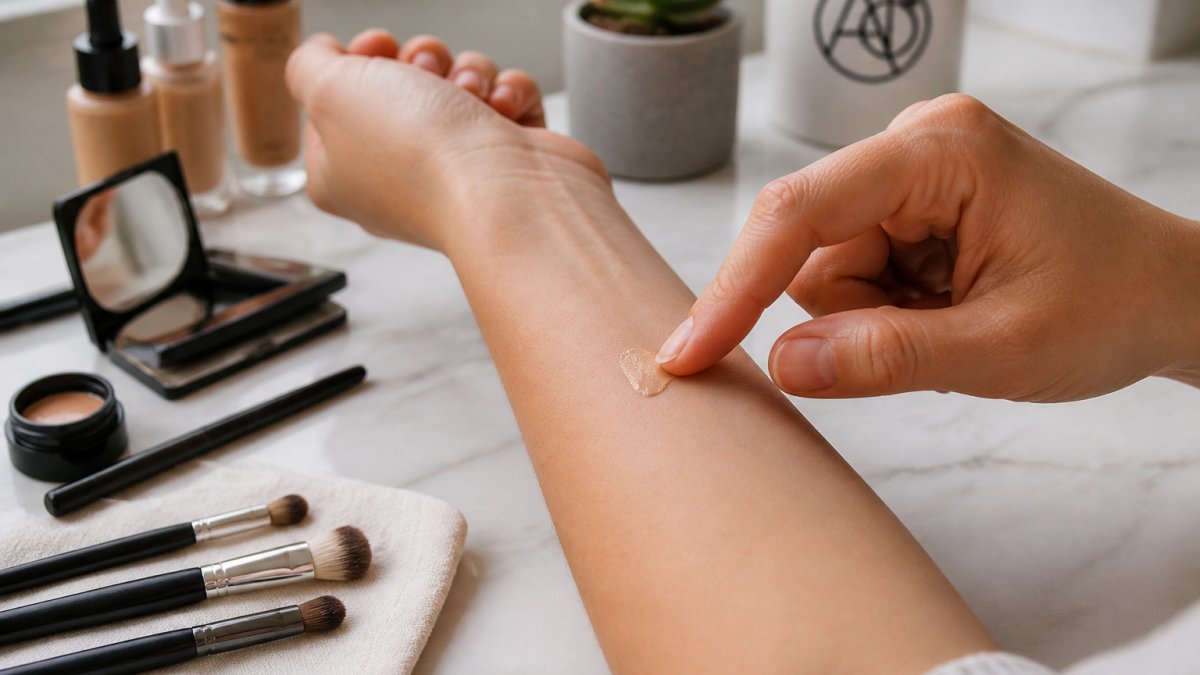
The 48-hour rule matters because sensitive skin doesn't always react instantly: some ingredients cause cumulative irritation, feeling fine for hours before your skin flares overnight.
Document each test, product name, date, location, result. After a few, patterns emerge: maybe you react to anything with essential oils, or fragrance-free products work fine. This data becomes your personal selection guide.
Testing on the face versus other areas
Your face is more reactive than your forearm, thinner, more permeable, and more exposed to environmental stressors.
That's why you patch test elsewhere first. But eventually, you need to know how a product performs on your actual face.
Once the 48-hour arm test passes, try it on a small, easy-to-hide area of your face, such as your jawline or behind your ear.
Apply it as you would in your full routine for 3-5 days to catch reactions a single application might miss.
Watch how your skin feels through the day, tightness, itching, or evening redness are signs the product isn't right for you, even if it passed the patch test.
Foundation for Sensitive Skin: What to Look For
A foundation is the base of your entire makeup routine. If it irritates your skin, everything else suffers.
For sensitive skin, prioritize these qualities:
- Lightweight texture, Heavy formulas trap bacteria and sweat against your skin
- Breathable formula, Your skin needs to breathe, especially under makeup
- Minimal ingredients, Fewer components mean fewer potential triggers
- Oil-free or non-comedogenic, Prevents pore clogging and bacterial growth
- Customizable coverage, You want to apply only what you need
Artonit's Aquarelle Visage Foundation is designed with sensitive skin in mind: a lightweight, breathable texture that blends seamlessly, a semi-matte finish that works across skin types, and buildable coverage you can apply only where you need refinement.

Test before committing to a full bottle, many luxury foundations feel luxurious on application but irritate skin after a few hours, which is why patch testing matters most for foundation.
Building a Sensitive-Skin Makeup Routine
Prep: Hydration and barrier support
Your skincare routine sets the stage for how makeup performs and how your skin reacts.
Start with a clean, hydrated base: use a gentle cleanser and avoid sulfates and hot water, both of which strip your skin barrier.
Follow with a hydrating toner or essence, a hydrated skin barrier is a resilient one that resists irritation and tolerates makeup more comfortably.
Apply a lightweight moisturizer next, for sensitive skin, "lightweight" means hydrating without feeling heavy or occlusive, not skipping the step.
If your skin is very reactive, add a barrier-support product with ceramides or niacinamide to strengthen its natural protective layer.
Wait 5-10 minutes for skincare to absorb before applying makeup, rushing means makeup sits on damp skin, causing poor wear and increased irritation.
Application order and technique
How you apply makeup matters as much as what you apply.
If you use primer, keep it minimal, heavy primers trap bacteria and sweat, while a light, hydrating one supports wear without compromising skin health.
Apply foundation with fingertips, a brush, or a damp sponge, fingertips offer the most control and gentleness. Avoid aggressive buffing and let the product meld into skin naturally.
Build coverage gradually, starting light and adding only where needed, to reduce total product on your skin and lower irritation risk.
For concealer, use the same gentle technique. Artonit's Hydrating Smooth Concealer is designed for the delicate under-eye area: warm a small amount on the back of your hand, then dab beneath the eye with your ring finger, which applies the least pressure.

Apply blush or cream color sparingly, cream products like Artonit's Cream Dabbers blend easily and need less product than powders. Start tiny and build if needed.
Set makeup lightly. For sensitive skin, heavy powder can feel suffocating and irritating.
Removal and post-makeup care
How you remove makeup matters as much as how you apply it.
Never use harsh cleansers or aggressive scrubbing. Your skin is already stressed from wearing makeup all day.
Use a gentle oil cleanser or micellar water for sensitive skin, applied with a soft cloth or cotton pad. Wipe gently, don't rub.
Follow with a gentle, sulfate-free cleanser, lukewarm water, and pat skin dry instead of rubbing.
After cleansing, apply your hydrating toner, moisturizer, and barrier-support products, this is when your skin repairs itself, so don't skip it.
If you wear makeup daily, take one day per week without it to let skin fully recover and reduce cumulative irritation.
Reading Ingredient Labels: What Sensitive Skin Needs to Know
Ingredient lists are your roadmap to safe luxury cosmetics.
The first five ingredients make up the bulk of the formula, if irritants appear there, skip the product. Everything after matters less because concentration is lower.
Learn irritants by their chemical names, not marketing names, "alcohol denat" sounds innocent and "phenoxyethanol" sounds safe, but neither is friendly to sensitive skin.
Look for these beneficial ingredients instead:
- Ceramides, Strengthen your skin barrier
- Niacinamide, Calms inflammation and supports skin health
- Glycerin, Hydrates without irritation
- Centella asiatica, Soothes reactive skin
- Hyaluronic acid, Holds moisture in your skin
When you find a luxury cosmetic with a clean ingredient list and beneficial components, that's your winner. The price tag becomes secondary to what's actually in the bottle.
Keep photos of ingredient lists you trust on your phone and compare new products against them, consistency builds confidence.
Luxury Cosmetics for Sensitive Skin: Artonit's Approach
Artonit was founded by artist and makeup artist Sergio Escalona with a philosophy that beauty should enhance, not irritate.
Take Artonit's Hydrating Smooth Concealer, designed for the delicate under-eye area with moisturizing ingredients that hydrate while delivering coverage.
Or Liquid Ecstasy, our liquid blush enriched with organic oils and essential oils, delivering color and luminosity without the heaviness of traditional cream or powder blush.
Choosing luxury cosmetics for sensitive skin feels risky. You're investing in quality, but worried about reactions.
Artonit builds every formula with sensitive skin in mind. Our small-batch cosmetics feature carefully selected ingredients, breathable textures, and performance that lasts through your day, without irritation.
| Step | What to Do | Why It Matters |
|---|---|---|
| Read ingredients | Check the first five ingredients for irritants | High concentrations of problem ingredients sit here |
| Patch test | Apply to arm for 48 hours before face use | Catches delayed reactions and prevents full-face irritation |
| Hydrate skin | Use moisturizer before makeup application | Hydrated skin tolerates makeup better and resists irritation |
| Apply gently | Use fingertips or soft brushes, avoid rubbing | Aggressive application increases irritation risk |
| Remove carefully | Use gentle cleansers and soft cloths | Harsh removal compounds daily irritation |
| Take breaks | Skip makeup one day per week | Lets skin fully recover from daily wear |
Frequently Asked Questions
What ingredients should people with sensitive skin avoid in makeup?
Common irritants include synthetic fragrances, essential oils, talc, and certain preservatives like phenoxyethanol. When choosing luxury cosmetics for sensitive skin, look for fragrance-free or naturally scented options, and check ingredient lists for known irritants. Hypoallergenic formulas are designed to minimize these triggers, though luxury positioning alone doesn't guarantee suitability for sensitive skin.
How do I patch test makeup before using it on my face?
Apply a small amount of the product to a discreet area like your inner arm or behind your ear and wait 48 hours. If no redness, itching, or irritation appears, it's generally safe to test on your face. For facial testing, apply the product to a small patch near your jawline or temple first, away from sensitive areas like the eyes. Monitor for reactions over 24-48 hours before full application. This approach helps identify sensitivities without risking visible irritation on areas you'll see daily.
What type of foundation is best for sensitive skin?
Look for lightweight, breathable foundations with minimal irritants and fragrance-free formulas. Foundations designed for sensitive skin typically feature hydrating ingredients and avoid heavy silicones or talc. Aquarelle Visage Foundation ($65) is specifically formulated as a lightweight, breathable option with a semi-matte finish that helps blur imperfections while remaining comfortable throughout the day. The key is building coverage gradually and applying to freshly moisturized skin to support your skin's barrier while maintaining a polished appearance.
Is hypoallergenic makeup better for sensitive skin?
Hypoallergenic formulas are designed to minimize common irritants and are generally a safer choice for sensitive skin than standard formulas. However, hypoallergenic labeling alone doesn't guarantee a product will work for everyone, individual sensitivities vary widely. Luxury positioning or sensory appeal (scent, texture, packaging) doesn't establish suitability for sensitive skin. Always patch test hypoallergenic products first, and prioritize ingredient transparency over marketing claims when selecting cosmetics for sensitive skin.