 Skip to content


How to Make Makeup Last All Day: A 2026 Guide
Table of Contents
- Why Your Makeup Fades by Midday
- Start With Skin Prep: The Foundation for Makeup That Lasts All Day
- Choose the Right Makeup Primer for Oily Skin
- Build a Long-Wear Base: Foundation and Concealer Techniques
- Set It and Forget It: Powder, Blotting, and Layering
- How to Use Setting Spray Correctly for 12-Hour Wear
- Beat Humidity, Sweat, and Life: Maintenance and Touch-Ups
- Conclusion: Your Ritual for Enduring Beauty
- Frequently Asked Questions
Last Updated: September 8, 2026
Why Your Makeup Fades by Midday
The primary reason makeup fades is that the layers applied to your skin are not properly anchored to one another. When foundation sits on a slippery moisturizer or bare, textured surface, natural oils and movement cause it to shift, settle into fine lines, and break apart by early afternoon. This guide explains how to make makeup last all day by building a stable, skin-friendly structure.
Most guides focus on product selection alone, but true longevity requires a shift in technique. Treat your face as a canvas that needs preparation, priming, and sealing. Below, we break down the exact sequence of steps, from skin prep to the final setting spray, that keeps your complexion intact through long days, humid commutes, and evening events.
Start With Skin Prep: The Foundation for Makeup That Lasts All Day
Skin preparation is the single most important step for achieving makeup that lasts all day. Clean, well-hydrated skin provides a smooth, even texture that allows base products to adhere properly, while neglected skin causes makeup to cling to dry patches or slide off excess oil.
Begin with a gentle cleanse to remove impurities without stripping the skin's natural moisture barrier. Follow with a lightweight, water-based moisturizer suited to your skin type; hydration prevents the cakey, cracked look that appears when makeup sits on dehydrated skin. Allow each product to absorb fully for a few minutes before moving to the next step, preventing pilling and ensuring your base has a stable surface to grip.
Choose the Right Makeup Primer for Oily Skin
For those with oily skin, a mattifying makeup primer for oily skin is the most effective tool to control sebum production and keep makeup in place. These primers typically contain oil-absorbing ingredients like silica, kaolin clay, or zinc PCA, creating a smooth, pore-minimizing surface that foundation can grip.
But the real reason your makeup separates by noon often has nothing to do with how much oil you produce, it is a chemistry mismatch between your primer and your foundation. Primers and foundations are built on one of two main carrier systems, silicone (usually dimethicone or cyclopentasiloxane) or water (often with glycerin or hyaluronic acid). When you layer a water-based foundation over a silicone-based primer, the foundation cannot bond to the slick silicone film; it beads up, slides, and pools in pores and fine lines within an hour. The reverse, a silicone foundation over a water-based primer, causes the foundation to sit on top of the skin without adhering, leading to patchy wear and transfer.
How to Identify Your Base
Check the ingredient list on both products. If the first few ingredients include any ending in "-cone" (dimethicone, cyclopentasiloxane, or phenyl trimethicone), it is silicone-based. If the first ingredients are water, aqua, or glycerin, it is water-based. A quick rule of thumb: if the product feels velvety and glides on like a smooth film, it is likely silicone-based; if it feels watery and absorbs quickly, it is likely water-based.
A Practical Decision Framework for Oily Skin
- If you have very oily skin and use a matte, silicone-based foundation: Choose a silicone-based, mattifying primer. The silicone layers will lock together, and the primer's silica or clay content will absorb oil throughout the day.
- If you prefer a lightweight, water-based foundation (like a tinted moisturizer or serum foundation): Choose a water-based primer that contains oil-control ingredients. Look for "oil-free" on the label, but confirm the first ingredient is water, not silicone.
- If you are unsure what your foundation is: Do a quick patch test on your jawline. Apply a small amount of primer, wait 60 seconds, then apply foundation over it. If the foundation pills, beads, or separates, you have a mismatch.
When testing a primer, apply it to your T-zone first, as this area produces the most oil and is where fading begins. Press the primer into the skin with your fingertips rather than rubbing it in, helping the product settle into pores and fine lines. Wait 60 to 90 seconds for the primer to set before applying foundation, a tacky surface grips better than a wet one.
For a budget-friendly option, drugstore primers often list their base ingredients clearly on the box. For luxury options, look for primers that explicitly state "silicone-free" or "water-based" on the front label. The price point does not determine compatibility, the ingredient list does.
Build a Long-Wear Base: Foundation and Concealer Techniques
The application technique for foundation and concealer matters more than the formula itself when aiming for long-wear results. Using a damp beauty sponge to press foundation into the skin, rather than swiping it on, creates a thinner, more even layer that bonds with the primer underneath.
Start with a small amount of product and build coverage gradually. A long-wear formula with buildable coverage lets you achieve the desired finish without a thick, heavy layer prone to creasing and sliding. For concealer, focus on areas needing the most coverage, such as under-eye circles and blemishes, and set these areas immediately with a light dusting of powder before they dry completely.
The goal is a seamless, skin-like finish, not a mask. When the base looks and feels like natural skin, it is less likely to crack or separate as the day progresses. This approach also prevents the buildup of product in fine lines and expression creases, the primary cause of the "caked" look that signals makeup failure.
Set It and Forget It: Powder, Blotting, and Layering
Setting powder is the critical bridge between your cream and liquid products and the rest of your makeup routine. A finely milled translucent powder locks in your foundation and concealer, absorbing excess oil and preventing your base from moving throughout the day.
Use a fluffy brush to apply a light, even dusting of powder to the T-zone and any areas prone to oiliness. For targeted oil control, the "baking" technique, leaving a thicker layer of powder to sit for five to ten minutes before brushing away, is highly effective for special occasions. The heat from your skin helps the powder meld with the foundation, creating a long-lasting, transfer-resistant seal.
Layering is the secret to endurance. After powdering your base, apply cream blush and bronzer, then set those with a complementary powder. This sandwiching technique locks each layer in place, preventing the fading and patchiness that occurs when cream products sit unprotected on top of powder.
How to Use Setting Spray Correctly for 12-Hour Wear
Knowing how to use setting spray correctly transforms a good makeup look into one that survives a 12-hour day. The proper method involves holding the bottle eight to ten inches from your face and misting in an "X" and "T" motion to ensure even, complete coverage.
The "X" and "T" pattern is not a myth; it is a deliberate technique that covers the full face. Start by misting from your left forehead to your right chin, then from your right forehead to your left chin, forming an "X". Follow with a horizontal mist across your forehead, nose, and chin, forming the top and bottom of a "T". This ensures every area receives a fine, even layer of fixative without oversaturating any single spot.
Allow the spray to dry naturally; do not fan your face, as this disrupts the film-forming ingredients that create the protective seal. For maximum hold, apply a second, lighter layer after your makeup has set for a few minutes. This fixative spray acts as a shield, preventing makeup from transferring onto clothing and resisting the effects of humidity and perspiration.
Beat Humidity, Sweat, and Life: Maintenance and Touch-Ups
Environmental factors like humidity, sweat, and even air pollution are the greatest enemies of long-lasting makeup, yet most guides treat them as an afterthought. Your maintenance strategy must change based on the environment you are in. A routine that works in a dry, air-conditioned office will fail within hours in a humid outdoor setting.
Humidity: The Science of Sweat and Sebum
In high-humidity environments (above 60% relative humidity), the air is already saturated with moisture, so your skin's sweat cannot evaporate efficiently. This trapped moisture mixes with your sebum and slowly breaks down the film-forming polymers in your foundation and setting spray, resulting in a patchy, melted look by early afternoon.
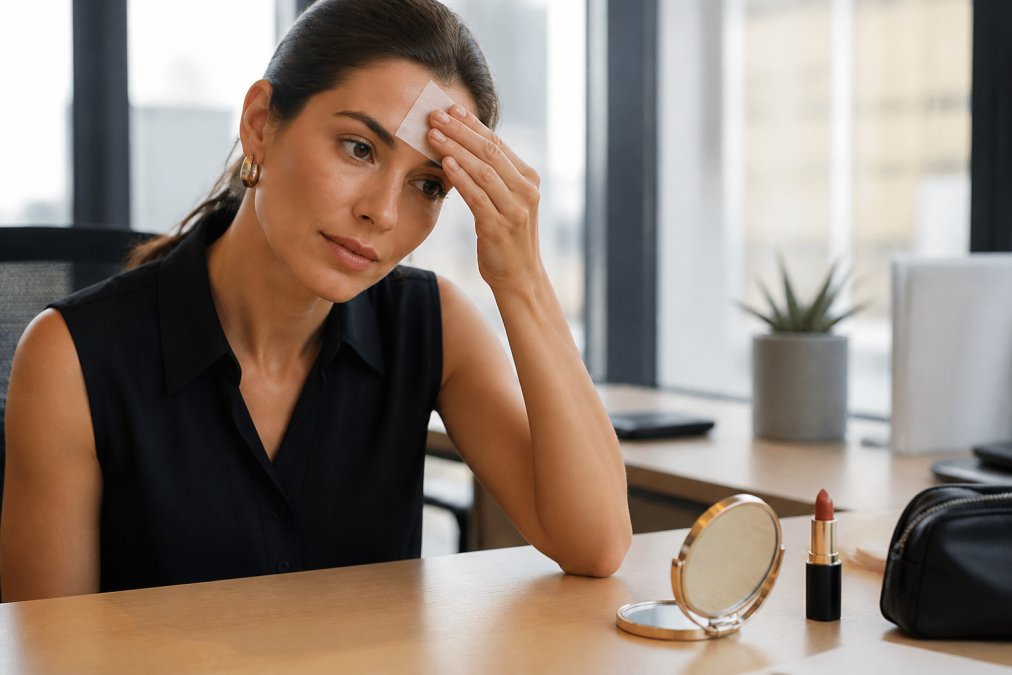
Your counter-strategy is to switch from powder-based touch-ups to blotting-based ones. Blotting papers are your first line of defense, press them gently against oily areas to absorb the mixture of sweat and sebum without disturbing your base. Unlike adding more powder, which can look cakey and trap moisture against the skin, blotting removes the problem at the source.
For a more targeted approach, carry a mini facial mist formulated with humectants like glycerin or hyaluronic acid. A light spritz before blotting helps rehydrate the skin and re-emulsify the makeup, allowing you to blot away the excess without pulling off your foundation. This two-step process, mist, then blot, is the technique professional makeup artists use on outdoor shoots in humid conditions.
Sweat: The Difference Between Light and Heavy Perspiration
Light perspiration (like a brisk walk to the subway) can be managed with blotting papers and a quick dusting of powder. Heavy perspiration (like a summer outdoor event or a workout class) requires a different approach. If you know you will be sweating heavily, apply a sweat-resistant setting spray before you leave, and carry a small travel-sized version for reapplication. Look for sprays that list "water-resistant" or "sweat-resistant" on the label, these contain film-forming polymers like acrylates copolymer that create a flexible, water-repellent seal over your makeup.
If your makeup does break from heavy sweat, do not try to layer new foundation over the damaged area. Instead, use a clean cotton swab to gently remove the broken makeup, then apply a thin layer of concealer to the spot, and set it with powder. This spot-correction method preserves the rest of your base and prevents the thick, built-up look that comes from layering.
Pollution: The Invisible Enemy
Air pollution, particulate matter, smoke, and urban smog, settles on your skin throughout the day and oxidizes your makeup. This oxidation causes foundation to darken, especially in the T-zone, and breaks down the antioxidants in your skincare. If you live in or commute through a dense urban area, your touch-up routine should include a midday antioxidant spritz. Look for mists containing vitamin C, niacinamide, or ferulic acid. A quick spritz at lunchtime neutralizes the oxidative stress on your makeup and prevents the dull, gray cast that pollution creates.
The 3-Step Refresh Protocol
When your makeup needs a mid-afternoon revival, follow this order:
- Mist your face lightly with a hydrating or antioxidant spray to rehydrate the makeup and skin.
- Blot with paper to remove excess oil and moisture, pressing, never rubbing.
- Spot-correct only the areas that have faded (under-eyes, nose creases, chin) with a small pointed brush and a dab of concealer, then set with a light press of powder.
A final spritz of setting spray over your touch-ups will re-seal the area and blend the new product seamlessly with the existing makeup. This approach keeps your complexion looking fresh and polished, extending the life of your original application well into the evening hours.
| Problem | Quick Fix | Tool |
|---|---|---|
| Oily T-zone in humidity | Mist, then blot | Facial mist, blotting papers |
| Heavy sweat breakthrough | Spot-correct with concealer | Cotton swab, concealer |
| Pollution-induced dullness | Antioxidant spritz | Vitamin C or niacinamide mist |
| Faded concealer under eyes | Dab, don't rub, with fingertip | Small pointed brush |
| Lipstick wear-off | Blot, reapply, dust powder through tissue | Tissue, powder |
| Creased eye shadow | Blend edges, set with skin-toned shadow | Blending brush |
Conclusion: Your Ritual for Enduring Beauty
Mastering how to make makeup last all day is less about buying expensive products and more about adopting a disciplined, layered routine. By preparing your skin, choosing compatible products, and using deliberate application and setting techniques, you create a look that remains vibrant and intact from morning to night. At Artonit, we craft high-performance cosmetics with pigment-saturated formulas designed for those who view their beauty routine as a sophisticated daily ritual. Discover a collection that transcends trends and supports your enduring expression. American Academy of Dermatology skin care tips recommends a consistent routine for skin health, which forms the foundation of any lasting makeup application. For those seeking formulas that honor this artistry, guidance on cosmetic product longevity from the FDA outlines how proper product storage and use affect performance. Our small-batch production ensures each piece is crafted with intention, offering a timeless elegance that complements your professional life. The Art of Beauty blog on makeup techniques explores how technique, rather than product alone, defines a flawless finish. Get started with Artonit and elevate your daily ritual into a lasting work of art.
Frequently Asked Questions
Why does my makeup not last all day?
Makeup typically fades because of excess sebum production, inadequate skin prep, or using incompatible formulas. If you skip primer or use a water-based foundation over a silicone-based primer, the layers won't adhere properly. Environmental factors like humidity also break down pigments. Start by evaluating your skin prep and ensuring your primer and foundation share the same base. A proper setting spray application is the final step to lock everything in place.
Does primer actually help makeup stay on all day?
Yes, when you choose the right type. A makeup primer for oily skin, for instance, creates a mattifying barrier that controls sebum and gives foundation a smooth surface to grip. Primers also fill in fine lines and pores, preventing makeup from settling into them. For dry skin, a hydrating primer provides the moisture needed to prevent flaking. Without primer, your base has nothing to adhere to, which shortens its wear time considerably.
What is the difference between setting spray and setting powder?
Setting powder is a loose or pressed product that sets your cream and liquid makeup, absorbing excess oil and preventing creasing. It is applied with a brush or sponge. Setting spray is a liquid mist applied after all makeup is finished. It works by fusing the layers of makeup together, creating a film that resists transfer, sweat, and fading. Many people use both: powder for targeted oil control and spray for overall longevity.
How can I make my makeup last through a 12-hour workday?
Focus on layering. Start with a mattifying primer and a long-wear foundation. Set your concealer with a translucent powder immediately. Use a damp beauty sponge to press powder into the skin for a smoother finish. Finish with a generous application of setting spray, holding the bottle 8-10 inches from your face. Carry blotting papers for midday touch-ups; pressing, not rubbing, will remove oil without disturbing your makeup.