 Skip to content


Benefits of Small Batch Artisanal Cosmetics
Table of Contents
- What Defines Small Batch Cosmetics?
- Fresher Formulas and Potent Ingredients
- Why Artisanal Beauty Products for Sensitive Skin Work
- Small Batch vs Mass Production Cosmetics: The Real Difference
- The Quality Control Advantage in Micro-Batches
- The Consumer Cost-Benefit of Artisanal Makeup
- How to Verify Small Batch Claims Before You Buy
- Conclusion: Is Small Batch Worth It?
- Frequently Asked Questions
Last Updated: September 9, 2026
What Defines Small Batch Cosmetics?
Small batch artisanal cosmetics are beauty products formulated and produced in limited quantities, often by hand, using meticulous craftsmanship rather than automated mass-production lines. This approach prioritizes quality control, ingredient potency, and product integrity over sheer volume. At Artonit, our couture cosmetics are crafted between Italy and the United States, where each pigment-saturated formula is developed with intention and produced in micro-batches that allow for hand-finished details.

Production scale directly influences what goes into the product and how it performs on your skin. Working in small quantities lets a formulator source higher-grade raw materials, adjust textures with precision, and maintain rigorous quality control standards that larger facilities cannot sustain. The result is a cosmetic richer in pigment, more refined in texture, and formulated to transcend trends rather than chase them.
Below, we break down the benefits of small batch artisanal cosmetics for your routine, how small batch compares to mass production, and how to verify a brand actually practices what it claims.
Fresher Formulas and Potent Ingredients
The most immediate of the benefits of small batch artisanal cosmetics is freshness. Products made in limited runs rather than warehoused for months reach you closer to the moment they were created, meaning better payoff, smoother blending, and a texture that hasn't dried out or shifted during extended storage.
Potency follows freshness. Active ingredients and pigments degrade over time, and a product sitting in a distribution center for six months is not performing at its peak. Small batch production shortens the gap between formulation and application, so the oils, waxes, and pigments in a freshly pressed compact retain their intended consistency and color saturation.
Why Artisanal Beauty Products for Sensitive Skin Work
For those seeking artisanal beauty products for sensitive skin, small batch manufacturing offers a structural advantage: fewer synthetic additives and preservatives. Mass production requires preservative systems and stabilizers to survive months on a shelf or in transit, while smaller runs do not demand the same chemical fortification, allowing formulators to focus on high-performance ingredients rather than shelf-life extenders.

This does not mean small batch cosmetics are preservative-free, which would raise legitimate safety concerns. Rather, the preservative load can be lighter and the additive profile simpler, reducing the likelihood of irritation. Consumers with reactive skin often find a formula with fewer synthetic components and a shorter, more transparent ingredient list easier to tolerate. The trade-off is a shorter shelf life, which is why batch dates and storage guidance matter.
The Stability Testing Protocol Behind the Claim
The real question for sensitive skin is not just what is left out, but how the brand proves what remains is safe over time. In the United States, the FDA does not require pre-market approval for cosmetics, but it holds manufacturers responsible for product safety under the Federal Food, Drug, and Cosmetic Act, including ensuring a product remains stable and free from microbial contamination through its intended shelf life (the FDA).
Reputable small batch makers typically run two tests mass-market brands rarely discuss publicly.
What to Ask a Maker About Stability
Most consumers never ask about stability testing because they assume it happens. With small batch products, the burden of proof shifts to the consumer. Before purchasing a formula for sensitive skin, ask the brand about its preservative system, whether the formula has passed a challenge test, and what its stated shelf life and recommended storage conditions are.
A credible maker will answer these directly. A brand that hesitates or deflects with phrases like "we use natural preservation" without naming the system is a red flag. The absence of a documented stability protocol does not mean a product is unsafe, but it does mean the maker has not verified safety under real-world conditions, a risk factor worth weighing for sensitive skin.
Small Batch vs Mass Production Cosmetics: The Real Difference
The real difference between small batch vs mass production cosmetics comes down to three variables: control, consistency, and compromise.
Mass production optimizes for uniformity across tens of thousands of units, requiring ingredients that behave predictably at scale, often meaning more fillers, binders, and preservatives. Quality control becomes statistical: a batch is approved if it falls within a tolerance range, not if every unit is flawless.
Small batch production inverts that logic. A formulator can inspect each run, adjust for humidity, and catch a texture variation before it reaches you. The trade-off is that small batch cosmetics are not identical from run to run, and that is by design. Slight variations in pigment or finish are markers of human craftsmanship, not defects. The challenge is distinguishing intentional variation from sloppy quality control, which is why batch numbers and formulator transparency matter.
| Factor | Small Batch | Mass Production |
|---|---|---|
| Batch size | Limited, numbered runs | Tens of thousands of units |
| Preservatives | Lighter load | Heavier, for long shelf life |
| Ingredient flexibility | High, adjustable per run | Low, standardized for scale |
| Quality control | Hands-on, per-unit inspection | Statistical sampling |
| Consistency | Slight natural variation | Uniform, identical units |
| Best for | Potency and craftsmanship | Accessibility and price |
The Quality Control Advantage in Micro-Batches
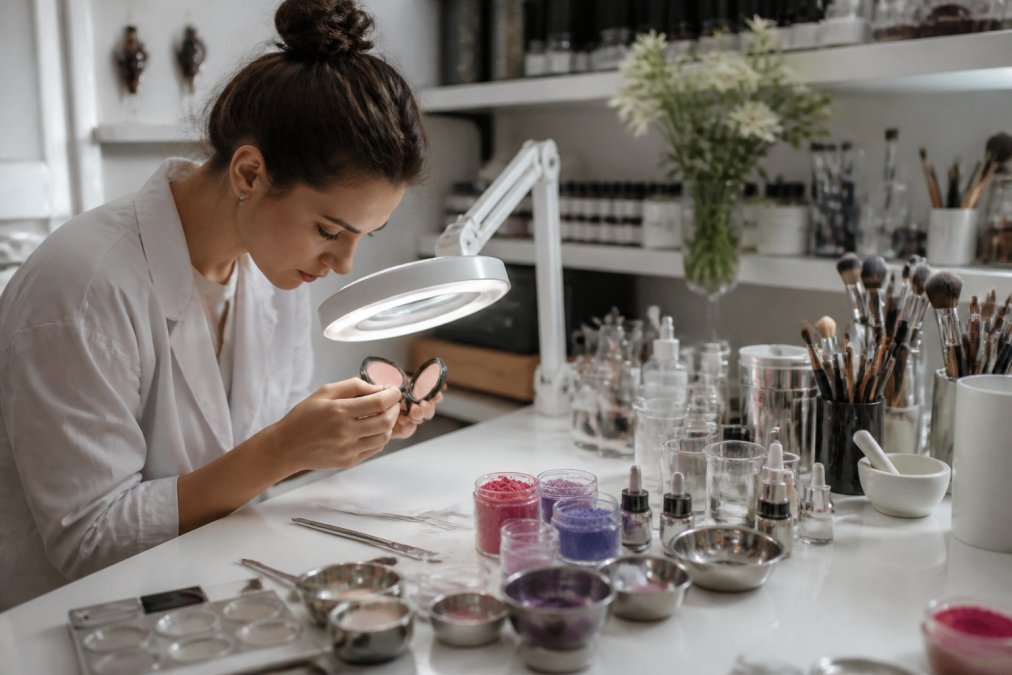
Quality control is where small batch manufacturing earns its reputation. In a micro-batch environment, every pressing, fill, and finish can be checked by hand. A formulator can catch a shade that pulled warmer than intended or a powder that pressed too loosely and correct it before the batch ships, a level of scrutiny impossible on a line producing thousands of units per hour, where inspection is necessarily a sampling process.
A common mistake is assuming handcrafted means inconsistent. In practice, small batch makers often maintain tighter batch consistency because they control every variable. The key is documentation. Reputable artisanal brands track each batch, record formulation adjustments, and can tell you exactly when your product was made and by whom.
The Consumer Cost-Benefit of Artisanal Makeup
Artisanal makeup costs more upfront, and the honest question is whether the value justifies the price. The cost-benefit calculation favors small batch when you weigh performance per use: a pigment-saturated eyeshadow requires less product for full payoff, so a compact lasts longer than a mass-market equivalent you must build up in layers. Higher-quality raw materials also resist fading and creasing throughout the day.

There is also what you are not paying for: marketing overhead, distribution margins, and the waste of products that sit unsold. When you buy from a small batch house, a larger share of your dollar goes into raw materials and formulation. For collectors and enthusiasts who view makeup as an extension of personal expression, the value extends beyond performance into craft, a palette with named shades and a hand-finished compact is closer to a curated object than a commodity.
How to Verify Small Batch Claims Before You Buy
Not every brand that says "small batch" practices it. Verification requires looking past the label and asking specific questions.
First, check for batch numbers, a genuine small batch maker will number or date each production run. Second, look for ingredient transparency; if a brand cannot articulate why it uses each ingredient or hides behind proprietary blends, that is a red flag. Third, ask about formulation timelines; a brand releasing new shades seasonally rather than continuously is more likely working in true micro-batches.
Regulatory compliance also matters. In the United States, cosmetics are regulated by the FDA, and while the agency does not require pre-market approval, it does require that products are safe and properly labeled. A credible artisanal brand should be able to discuss its compliance posture, including good manufacturing practices and ingredient safety assessments, without hesitation. According to FDA guidance on cosmetics regulation, manufacturers are responsible for ensuring their products are safe and properly labeled before they go to market.
The Regulatory Bridge Most Small Brands Miss
The gap between a hobbyist maker and a professional small batch brand is not passion; it is documented compliance. The FDA does not certify small batch makers, but it expects all cosmetic manufacturers to follow Good Manufacturing Practices (GMPs). A professional small batch brand should be able to articulate how it meets those expectations.
Specific markers of a compliant small batch operation include: a written sanitation program for equipment and workspaces, documented training for personnel handling raw materials, and a recall procedure that traces each batch to its distribution points. The FDA also requires that ingredient labels comply with the Fair Packaging and Labeling Act, meaning each ingredient listed in descending order of predominance.
The Ingredient Safety Assessment Standard
Beyond GMPs, the FDA expects manufacturers to substantiate the safety of each ingredient and the finished product. This is not a formal filing requirement, but it is a legal obligation under the FD&C Act. A professional small batch maker will have on file a safety assessment for each formula, typically prepared by a qualified toxicologist or cosmetic chemist, reviewing ingredient concentrations, potential impurities, and cumulative exposure from typical use.
A common pattern among credible artisanal brands is to maintain a Certificate of Analysis (CoA) for each raw material batch, verifying purity and absence of heavy metals like lead, arsenic, and mercury. The FDA has set action levels for lead in cosmetics, and while there is no federal limit for all heavy metals, the agency has flagged concerns about contamination in mineral pigments, which are common in small batch color cosmetics (the FDA). When you ask about heavy metal testing, a straight answer about third-party lab results is a stronger verification signal.
If a brand cannot provide a batch number, a clear ingredient list, or a straight answer about when your product was made, treat the "small batch" claim with skepticism. The absence of transparency is itself a signal about their quality control standards. Similarly, if a brand cannot discuss its GMP practices or ingredient safety assessments in concrete terms, it is likely operating below the professional threshold that the FDA expects.
Conclusion: Is Small Batch Worth It?
Small batch artisanal cosmetics are worth the investment if you value freshness, potency, and a genuine connection to the craft of formulation. The benefits are concrete: richer pigments, lighter preservative loads, and quality control that happens by hand rather than by statistical sampling. The trade-offs are real too, including a higher price point and a shelf life that demands attention.
For those who view makeup as a daily ritual and a form of personal expression, the choice is not between two types of lipstick; it is between a product made to a minimum standard and one made with intention. Artonit embodies this philosophy, offering pigment-saturated formulas developed with meticulous craftsmanship between Italy and the United States. Our compacts are designed to transcend trends, providing a sophisticated, artistic soul to every routine.
Frequently Asked Questions
What does small batch mean in cosmetics?
Small batch means a cosmetic is produced in limited quantities, often dozens to a few hundred units at a time, rather than thousands on an automated line. This production method allows the formulator to oversee each stage closely, ensuring batch consistency and quality. It also means ingredients are mixed closer to the time of purchase, which helps preserve potency and freshness.
Are artisanal cosmetics better for sensitive skin?
Often, yes. Artisanal beauty products for sensitive skin typically contain fewer synthetic additives, preservatives, and fragrances that can trigger irritation. Because batches are smaller, makers can use higher-quality raw materials and avoid harsh fillers. However, you should always check the ingredient list, as natural ingredients can still be allergens for some individuals.
Is small batch makeup more expensive?
Small batch cosmetics usually cost more upfront because they involve higher-grade ingredients and intensive manual labor. However, the cost-benefit analysis favors the consumer in other ways. Higher pigment concentration means you use less product per application, and the absence of fillers means the product performs better, so a $150 palette can outlast two cheaper alternatives.
How do I know if a brand truly uses small batch production?
Look for specific signals on the brand's website. Transparent makers often share details about their supply chain, name their raw material suppliers, and discuss their quality control testing. They may also number their batches or note production dates. A genuine small batch brand will explain its process without vague marketing language about 'artisanal' methods.
The decision ultimately comes down to what you expect from your cosmetics. If you want a product that performs at its peak, reflects genuine artistry, and holds up to the scrutiny of daily use, small batch is the clear choice. Discover the vision at Artonit and experience makeup as it was meant to be: crafted, not manufactured.