 Skip to content


How to Choose Lipstick for Skin Tone
Table of Contents
- What You'll Need to Find Your Perfect Lipstick
- Step 1: How to Determine Skin Undertone
- Step 2: Understand Lipstick Color Theory for Beginners
- Step 3: Best Lipstick for Cool vs Warm Skin
- Step 4: Match Lipstick to Your Skin Depth
- Step 5: Consider Finish and Texture
- Common Mistakes to Avoid When Choosing Lipstick
- Conclusion: Your Lipstick, Your Signature
- Frequently Asked Questions
Last Updated: September 8, 2026
Choosing a lipstick that flatters your complexion is less about trends and more about the relationship between color and skin. The process of learning how to choose lipstick for skin tone begins with the natural pigments beneath your skin's surface. At Artonit, we craft couture cosmetics that treat color as personal expression, and the right shade should feel like an extension of your identity. The secret lies in mastering two concepts: your undertone and your skin's depth.
Most guides stop at the vein test. A complete framework accounts for color theory, finish, and texture so you can select a lipstick for skin tone that looks intentional in any light. Below are five practical steps that move you from guessing to confidence.
What You'll Need to Find Your Perfect Lipstick
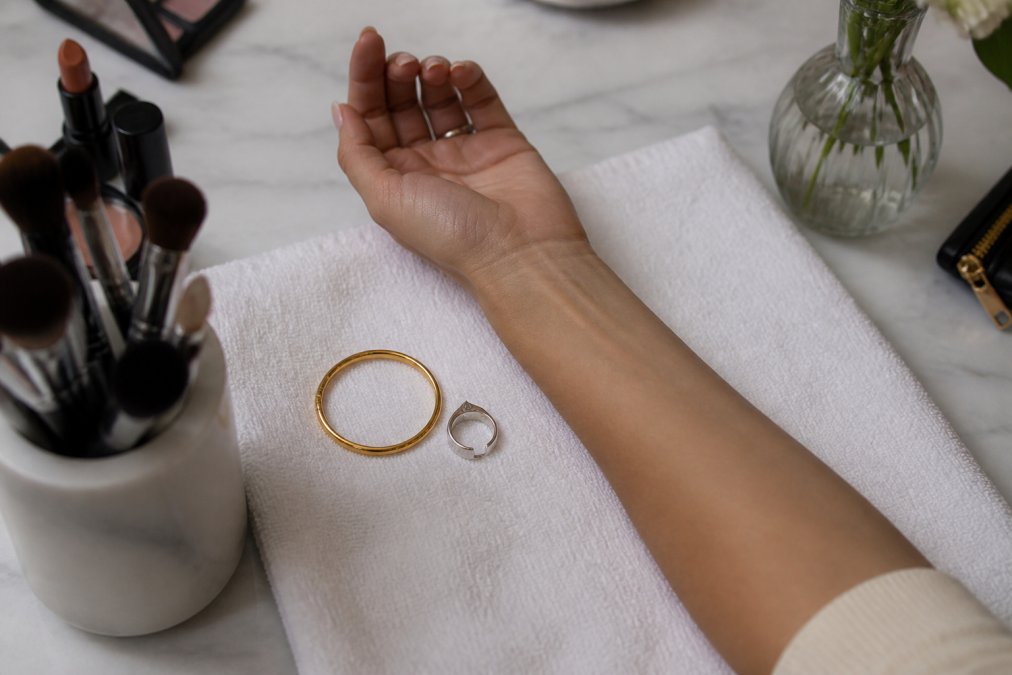
Before you begin, gather a few simple tools so your assessment happens in consistent conditions. You will need a mirror, natural daylight (ideally near a window), a white towel or piece of paper, and a selection of lipsticks in both blue-based and orange-based families.
Neutral backgrounds matter more than you think. A white towel neutralizes the environment so your skin's true undertone isn't influenced by surrounding colors like a yellow wall or a red shirt.
Step 1: How to Determine Skin Undertone
Your undertone is the subtle hue beneath your skin's surface, constant regardless of tanning or burning. It is the first step in choosing lipstick for skin tone because every flattering shade matches this underlying pigment. Undertones fall into three categories: cool, warm, and neutral.
A quick way to identify yours is the jewelry test. If gold jewelry makes your skin appear radiant and silver washes you out, you likely have a warm undertone. If silver brightens your complexion while gold makes you look sallow, you are probably cool-toned. Those who look equally balanced in both metals typically have a neutral undertone.
The Vein Test and Other Quick Checks
Examine the veins on the inside of your wrist in natural light. Blue or purple veins suggest a cool undertone; green veins suggest warm, since yellow tints them green (healthline.com). A mix of both suggests neutral.
Warm undertones tend to tan easily, while cool undertones often burn first. Neutral undertones may do both. These are directional clues, not absolute rules.
Step 2: Understand Lipstick Color Theory for Beginners
Color theory connects your undertone to harmonious shades. Every lipstick has a hue (its place on the color wheel), a value (how light or dark), and an intensity (how vivid or muted). Your undertone determines which hues harmonize; your skin depth determines which values and intensities work best.
The guiding principle is color harmony: colors sharing an undertone complement each other. Blue-based pinks look electric on cool skin but jarring on warm skin, where orange-based corals feel cohesive. Rather than memorizing every shade, learn to read a lipstick's undertone by looking at it.
Hue, Value, and Intensity Simplified
Hue is the dominant color family: red, pink, peach, berry, or brown. Value describes whether the color leans light or deep. Intensity tells you whether the pigment is bright and saturated or soft and muted.
For a natural look, choose a value close to your natural lip color but a hue matching your undertone. For a statement look, push the value darker or brighter while keeping the hue harmonious. This is the core of lipstick color theory for beginners.
Going Beyond Warm and Cool: Seasonal Color Analysis
Most guides stop at the binary warm/cool split, but that misses the nuance separating a good shade from a transformative one. Seasonal color analysis refines undertone into four palettes: Spring, Summer, Autumn, and Winter (scienceofpeople.com). Each combines your undertone with your skin's depth and contrast level for a more precise prescription.
- Spring: Warm undertone with light-to-medium depth and bright, golden clarity. Your lipstick family includes peach, coral, warm pink, and golden-toned reds. Avoid deep wines and blue-based berries, which can drain color from your face.
- Summer: Cool undertone with light-to-medium depth and soft, muted characteristics. Your colors are dusty rose, soft mauve, rosewood, and muted berry. Steer clear of neon pinks and orange-reds, which fight your natural softness.
- Autumn: Warm undertone with medium-to-deep depth and rich, earthy characteristics. Brick, terracotta, copper, caramel, and warm browns are your power shades. Icy pinks and bright corals may look disconnected from your skin.
- Winter: Cool undertone with medium-to-deep depth and high contrast. You can carry bold blue-reds, fuchsia, deep plum, and wine with authority. Pale nudes and orange-based corals tend to wash you out.
To find your season, look at your natural contrast level, the difference between skin, hair, and eye color. High contrast points toward Winter or Autumn; low contrast points toward Spring or Summer. This explains why two people with the same undertone look different in the same lipstick.
This seasonal lens can add precision. Once you know your season, you can explore color families that may be pre-validated for your complexion.
Step 3: Best Lipstick for Cool vs Warm Skin
For cool undertones, the best lipstick for cool vs warm skin comparison reveals a clear preference for blue-based colors. Berry shades, raspberry pinks, rose tones, and classic blue-reds like crimson make teeth look whiter and skin brighter.
Warm undertones shine in orange-based and yellow-based colors: brick reds, terracotta, peach, coral, and warm caramel browns. These echo the golden pigment in your skin, creating sun-kissed harmony. Neutral undertones can wear both families, though muted versions look most refined.
Shades That Flatter Cool, Warm, and Neutral Undertones
Cool-toned? Reach for berries, plums, or roses. Warm-toned? Look for coral, peach, brick, or copper. Neutral undertones can experiment with mauve, dusty rose, and balanced reds between blue and orange.
A common mistake is equating skin depth with undertone. A fair-skinned person can be warm-toned, just as a deep-skinned person can be cool-toned. Assess undertone independently from depth, then combine both factors.
Step 4: Match Lipstick to Your Skin Depth
Your skin depth determines the value and intensity of the lipstick you choose. While undertone tells you which color family to wear, depth tells you how light, dark, vivid, or muted that color should be. For fair skin, sheer washes and lighter values prevent the lipstick from overwhelming your features.
Medium complexions handle more pigment and mid-tone values, while olive skin suits shades with a hint of brown or grey. Deep skin tones glow in highly saturated colors and carry darker berries, wines, and brick reds with ease. The goal is contrast without clashing.
Fair, Medium, Olive, and Deep Complexions
Fair cool skin pairs with soft pinks and light berries; fair warm skin suits peach and light coral. Medium cool skin wears rose and mauve; medium warm skin carries apricot and warm nude lipstick tones.
Olive skin looks stunning in dusty rose, brick, and muted berries. Deep cool skin radiates in plum and wine; deep warm skin is breathtaking in rich terracotta and burnt orange. These are starting points, not rules, swatching remains the ultimate test.
Step 5: Consider Finish and Texture
Undertone and depth determine the color; finish and texture determine how it wears. Matte offers high pigment saturation and longevity, ideal for bold shades. Satin and cream balance color and comfort, while glosses and sheer balms offer a softer wash of color.
If you have dry or lined lips, a creamy or satin formula is more forgiving than matte. For a 12-hour day, a transfer-resistant matte or long-wearing stain layered under a balm holds up better than a traditional cream. The best lipstick for skin tone also respects the condition of your lips.
How Finish Interacts With Skin Texture and Age
The finish you choose changes how your entire face reads, especially as skin texture evolves with age. After 40, lips may lose volume and fine vertical lines can become more pronounced (peer-reviewed research). A matte lipstick, which reflects no light, can settle into those lines and create a dry, cracked appearance even when comfortable. Satin or cream finishes, with their light-reflecting particles, may help blur imperfections.
Matte formulas may contain higher levels of powder and silica, which can absorb oil and create friction. On smooth lips, this can look crisp and modern; on textured lips, that friction may catch on every ridge. Glossy and satin finishes often use oils and emollients that can help fill micro-crevices and create a smooth optical surface.
If you love matte but worry about texture, layer: apply a thin layer of lip balm, wait 60 seconds for it to absorb, then apply the matte lipstick over it. You retain most of the pigment and longevity while gaining a smoother appearance. Alternatively, press a tiny amount of clear gloss onto the center of your lips for dimension without sacrificing intensity.
Finish by Occasion and Skin Type
Oily skin around the mouth can break down cream and gloss formulas faster, causing feathering. A matte or transfer-resistant formula will stay in place longer, or use a lip liner as a barrier. Dry skin can make matte formulas feel tight by mid-day; a satin or tinted balm keeps lips hydrated while still delivering color.
- Matte: Best for oily skin, long events, and bold statement colors. Choose this when you want maximum staying power and don't mind a flat, intense look.
- Satin/Cream: The most universally flattering finish. It works across skin types and ages, offering moderate longevity with a soft sheen that mimics natural lip texture.
- Gloss/Sheer: Ideal for dry lips, casual settings, and daytime wear. It adds dimension and moisture but requires reapplication every few hours.
- Stain: A liquid or gel that dyes the lips. It offers the longest wear and never feels heavy, but can be drying on textured lips, always layer a balm over it.
The finish is not an afterthought, it affects how the color reads on your face and how it holds up through your day. Matching the finish to your lip texture and skin type is just as important as matching the shade to your undertone.
Common Mistakes to Avoid When Choosing Lipstick
The most frequent error is testing lipstick on your wrist or hand. The skin there does not match your lips or the skin around your mouth, so the color will read differently. Always swatch on your actual lips or, at minimum, on your fingertip held near your mouth.
Another misstep is choosing a shade based on skin depth alone while ignoring undertone, leaving your face looking flat or washed out. Avoid shopping under store lighting, which is often warm and yellow, a perfect nude under those bulbs can appear grey or chalky in natural daylight.
Conclusion: Your Lipstick, Your Signature
Finding your perfect lipstick is a process of self-discovery, not a one-size-fits-all formula. By mastering your undertone, understanding color theory, and respecting your skin's depth and texture, you transform a daily routine into a ritual of personal expression. This is the philosophy behind Artonit's approach: makeup as an extension of your identity, crafted to transcend trends.
Whether you prefer a sheer wash of color or a pigment-saturated statement, the right shade should make you feel more like yourself. Start with these five steps, trust the process, and let your lips become the canvas for your signature hue. Discover the vision at Artonit and find a lipstick for skin tone that speaks to your artistry.
Frequently Asked Questions
How can I find lipstick shades that match my skin tone?
Start by identifying your undertone using the vein test or jewelry test. Then, choose shades with the same undertone: cool-toned skin pairs with blue-based or berry shades, warm-toned skin with orange-based or peach tones, and neutral-toned skin can pull off most colors. Finally, match the shade's depth to your skin's depth (fair, medium, or deep) for a harmonious look.
What is the lipstick rule for skin undertones?
The rule is simple: choose lipsticks with the same undertone as your skin. Cool undertones look best with blue-based shades like raspberry or plum, warm undertones shine with orange-based shades like coral or brick red, and neutral undertones can wear both. This creates color harmony, making your lipstick look naturally flattering rather than clashing with your complexion.
Does hair color affect which lipstick shade I should choose?
Yes, hair color influences overall color contrast and can guide your choice. For instance, high-contrast features like dark hair and fair skin can carry bold, saturated shades, while low-contrast features often look better in softer, muted tones. However, your skin's undertone and depth remain the primary guide; hair color is a secondary factor to fine-tune your selection.